

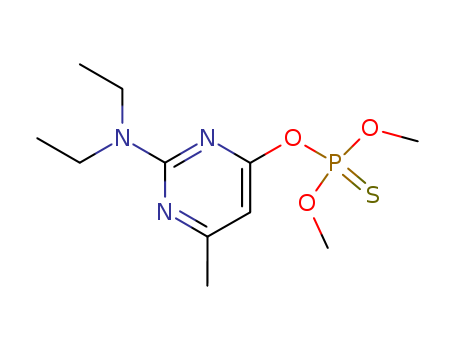
Pirimiphos-methyl
Contact usFactory supply Pirimiphos-methyl 29232-93-7 with low price
- Molecular Formula: C11H20N3O3PS
- Molecular Weight: 305.338
- Appearance/Colour: Yellow liquid
- Vapor Pressure: 3.52E-06mmHg at 25°C
- Melting Point: 15 °C
- Refractive Index: 1.555
- Boiling Point: 386.5 °C at 760 mmHg
- PKA: 3.71
- Flash Point: 187.6 °C
- PSA: 98.61000
- Density: 1.229 g/cm3
- LogP: 3.17790
Pirimiphos-methyl(Cas 29232-93-7) Usage
|
Reactivity Profile |
Organophosphates are susceptible to formation of highly toxic and flammable phosphine gas in the presence of strong reducing agents such as hydrides. Partial oxidation by oxidizing agents may result in the release of toxic phosphorus oxides. |
|
Flammability and Explosibility |
Notclassified |
|
Trade name |
ACTELLIC?; ACTELLIFOG?; BLEX?; ENT 27699Gc?; DOMINATOR? EAR TAG; DOUBLE BARREL? EAR TAG; PLANT PROTECTION PP511?; PP511?; SILOSAN?; SYBOL?; TOMAHAWK?[C] |
|
Safety Profile |
Moderately toxic by ingestion. Mutation data reported. When heated to decomposition it emits very toxic fumes of NOx, POx, and SOx. |
|
Potential Exposure |
Pirimiphos-methyl is a post -harves organophosphate insecticide/acaricide used to control a variety of insects in stored grain products and seed such as corn, rice, wheat and sorghum. It is also incorporated into cattle ear tags, and used for the fogging treatment of iris bulbs and preharvest cleanup of fruits and vegetables. |
|
Carcinogenicity |
When rats were given diets with 0, 10, 50, or 300 ppm pirimiphos methyl (equivalent to 0, 0.4, 2.1, or 12.6 mg/kg/day) for 2 years, 4 of the 42 high-dose male rats had pancreatic islet cell adenomas and 1 had a carcinoma compared to none in control male rats . In a carcinogenicity study, mice were given diets with 0, 50, 200, or 400/300 ppm pirimiphos methyl (equivalent to 0, 8.3, 33, or 52 mg/kg/day (males); 0, 9.7, 39, or 61 mg/kg/day (females)) for 78 weeks . The initial 400 ppm dose resulted in excessive toxicity and moribundity and was reduced to 300 ppm after 8 days. There was no evidence of carcinogenicity. In another mouse carcinogenicity study, pirimiphos methyl was administered in the diet at levels of 0, 5, 250, or 500 ppm (equivalent to 0, 0.5, 25.9, or 45.0 mg/kg/ day (males) and 0, 0.6, 27.6, or 50.6 mg/kg/day (females), respectively) for 80 weeks. The test diet for the highest dose groups initially contained 300 ppm of the test compound (the duration of treatment was not specified). The dose was then increased weekly by 50 ppm to 500 ppm. No evidence of carcinogenicity was observed. |
|
Metabolic pathway |
The metabolism of pirimiphos-methyl is similar in soils, plants and animals and can be represented by initial hydrolysis to yield 2-diethylamino- 6-methyl-p yrimidin-4-0l which may be either conjugated or successively N-de-ethylated. In plants, pirimiphos-methyl itself is N-de-ethylated. It is probable that the oxon form of the compound is formed in many systems but it is more labile than the parent compound and is often not detected. 0-Dealkylation, as with most organophosphates, is most probably a major detoxification route in mammals but the evidence for it in the case of pirimiphos-methyl is poor. |
|
Degradation |
Pirimiphos-methyl is hydrolysed under both acidic and basic conditions and is most stable at pH 7 (PM). The main product of hydrolysis was the pyrimidinol (2). There is no information, however, on the degradation products formed under either acidic or basic conditions. The DT50 of degradation was in the range of 3-4 days in sterile deionised water in the dark. Photolysis was rapid but the products of photolytic breakdown were not described (PSD, 1997). |
|
Incompatibilities |
May react violently with antimony(V) pentafluoride. Incompatible with strong acids and alkalies, lead diacetate, magnesium, silver nitrate. In the presence of strong reducing agents such as hydrides, organophosphates form highly toxic and flammable phosphine gas. Contact with oxidizers can cause the release of toxic oxides of phosphorus. |
|
Waste Disposal |
Destruction by alkali hydrolysis or incineration. Containers must be disposed of properly by following package label directions or by contacting your local or federal environmental control agency, or by contacting your regional EPA office. |
|
Definition |
ChEBI: An organic thiophosphate that is O,O-dimethyl O-pyrimidin-4-yl phosphorothioate substituted by a methyl group at position 6 and a diethylamino group at position 2. |
|
General Description |
Yellow liquid. Corrosive to tin and mild steel. Used as an insecticide. |
|
Agricultural Uses |
Insecticide, Acaricide: Pirimiphos-methyl is a post-harvest insecticide used to control a variety of insects in stored grain products and seed such as corn, rice, wheat and sorghum. It is also incorporated into cattle ear tags, and used for the fogging treatment of iris bulbs and pre-harvest clean up of fruits and vegetables. |
InChI:InChI=1/C11H20N3O3PS/c1-6-14(7-2)11-12-9(3)8-10(13-11)17-18(19,15-4)16-5/h8H,6-7H2,1-5H3
29232-93-7 Relevant articles
Green synthesis method of pirimiphos-methyl
-
Paragraph 0037-0052, (2021/02/13)
The invention provides a green synthesis...
Effect of refining processes on magnitude and nature of fenitrothion and pirimiphos-methyl residues in maize oil and bioavailability of their cake residues on rats
Farghaly,Taha,Soliman,Fathy,Bedair
, p. 923 - 938 (2013/05/22)
MAIZE seeds obtained from 14C-fenitrothi...
Insecticidal composition for agricultural and horticultural use
-
, (2008/06/13)
A synergistic insecticidal composition c...
29232-93-7 Process route
-

-
2524-03-0
dimethyl chlorothiophosphate

-

-
42487-72-9
2-diethylamino-4-hydroxy-6-methyl-pyrimidine

-
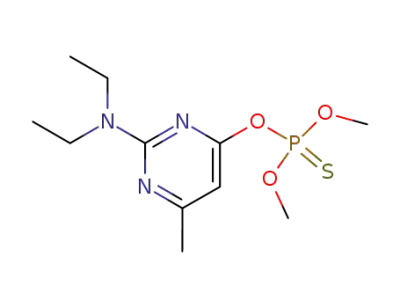
-
29232-93-7
Pirimiphos-methyl
| Conditions | Yield |
|---|---|
|
2-diethylamino-4-hydroxy-6-methyl-pyrimidine;
With
potassium carbonate;
In
water; toluene;
at 78 - 93 ℃;
for 0.5h;
Green chemistry;
dimethyl chlorothiophosphate;
at 20 ℃;
Solvent;
Temperature;
Green chemistry;
|
98.6%
|
|
2-diethylamino-4-hydroxy-6-methyl-pyrimidine;
With
potassium carbonate;
In
benzene;
for 3h;
Reflux;
dimethyl chlorothiophosphate;
In
butanone; benzene;
at 60 - 95 ℃;
for 2h;
Reflux;
|
-
-
29232-93-7
Pirimiphos-methyl
| Conditions | Yield |
|---|---|
|
2-Diaethylamino-4-methyl-6-hydroxy-pyrimidin, Dimethylchlorothiophosphat, K2CO3;
|
|
|
entspr. 6-Hydroxy-pyrimidin, K-Carbonat, Dimethylchlorthiophosphat;
|
|
|
|
29232-93-7 Upstream products
-
2524-03-0
dimethyl chlorothiophosphate
-
42487-72-9
2-diethylamino-4-hydroxy-6-methyl-pyrimidine
Other Customizd Materials
-
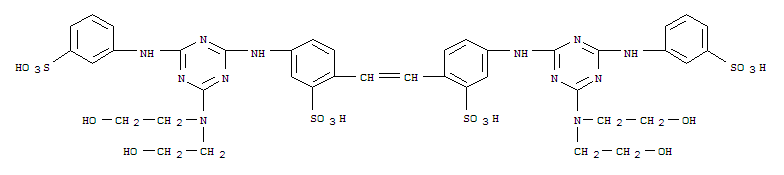
4,4'-bis[[4-[bis(2-hydroxyethyl)amino]-6-(m-sulphoanilino)-1,3,5-triazin-2-yl]amino]stilbene-2,2'-disulphonic acid
CAS:5131-70-4
-

Benzonitrile,2,4-dimethyl-
CAS:21789-36-6
-
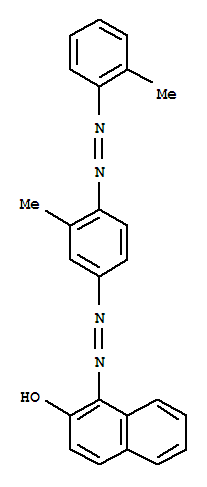
1-[[3-methyl-4-[(2-methylphenyl)azo]phenyl]azo]-2-naphthol
CAS:13463-64-4
-
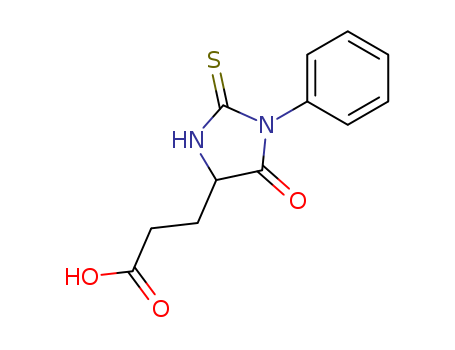
PTH-L-GLUTAMIC ACID
CAS:5624-27-1
-
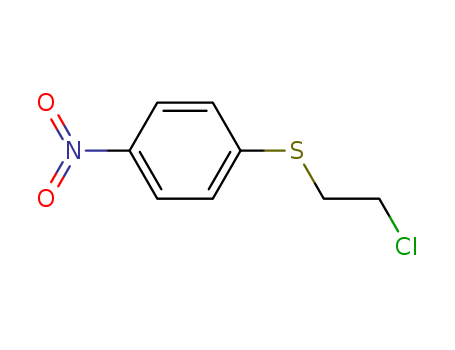
1-[(2-chloroethyl)thio]-4-nitrobenzene
CAS:5535-73-9
-

4,8,12,15,19,23-Hexaazahexacosane-1,26-diamine
CAS:84145-44-8
-
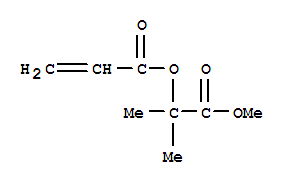
2-methoxy-1,1-dimethyl-2-oxoethyl acrylate
CAS:63905-46-4
-
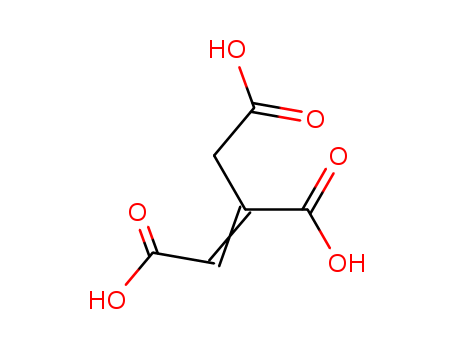
propene-1,2,3-tricarboxylic acid
CAS:499-12-7
NEWSLETTER
For inquiries About Our Products, Please Leave Your E-Mail To Us And We will Contact You Within 24 Hours.